
The second supply chain: why paperwork sets the pace

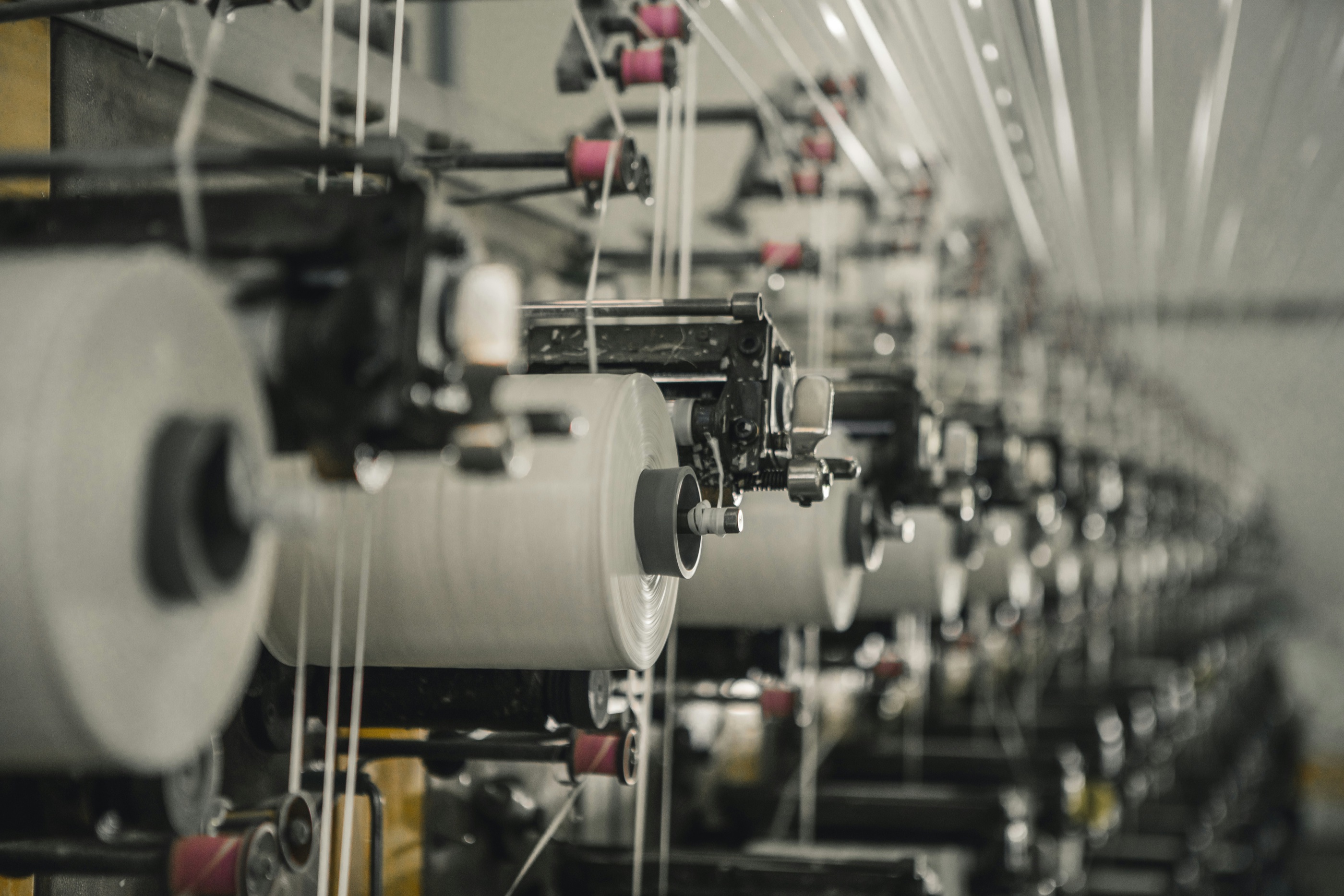
Photo by Kevin Limbri on Unsplash
Walk a textile factory floor and you'll struggle to find the bottleneck. The cutting tables are full, the sewing lines are staffed and moving. Even with every line running, a higher-priority order could be quietly sitting queued at the end of the line, waiting its turn. Why? Not a production problem - the commercial manager is waiting on a lab dip approval to be confirmed over email. The compliance certificate has to be re-requested because the one person who could confirm it is on holiday, and updates to style measurements are lost amongst the WhatsApp and email threads of merchandisers in London and a manufacturer in Ho Chi Minh City.
Two supply chains, running side by side
Every physical step in textile production has a paper twin. Before a colour is dyed at volume, someone has to approve the lab dip against the standard. Before a fabric ships, someone has to confirm its composition and check that the compliance certificate - OEKO-TEX, GOTS, a BSCI audit report - actually covers what's being shipped and hasn't expired. Before a bulk order starts, someone has to sign off the tech pack, and every revision after it.
None of this touches a spinning frame or a sewing machine. It happens in email, in WhatsApp, in PDFs passed back and forth, and it happens on a different clock to the factory.
The physical chain moves at the speed of machinery and labour, which manufacturers have spent decades optimising. The paperwork chain moves at the speed of someone in one time zone noticing a message from someone in another, reading it, deciding what it means, and typing a reply - and it has had almost none of that same investment. So the paperwork chain, not the factory, is what actually sets the ship date.
The shop floor is rarely waiting on fabric. It's waiting on a client approval.
Why the paper twin is so slow
It isn't slow because the people running it are careless. It's slow because the work is structurally awkward for a person to do well at scale:
- The channels are scattered. A single order's approvals can be spread across email, WhatsApp and a supplier portal, with no single place that shows what's outstanding.
- Every check is a comparison, done from memory. Does this certificate actually cover this fabric, and is it still valid? Does this lab dip match the standard the buyer signed off? A person has to hold the requirement in their head and check the document against it, every time, for every order.
- Nothing chases itself. A pending approval doesn't escalate on its own. Someone has to remember who owes what, and follow up again, and again, across every live order at once.
- The result has to be re-typed somewhere else. An approval that arrives as a WhatsApp message or a scanned PDF isn't yet a fact the ERP or PLM system knows. Someone has to transcribe it in.
That's a lot of low-judgement, high-volume work landing on merchandisers and QA staff whose actual skill is judgement: which mill to push, which defect to accept, which relationship is worth the extra call. Chasing inboxes across time zones isn't the skill anyone was hired for.
Agentic workflows, aimed at the paper twin
This is exactly the kind of work agentic workflows are suited to, and it's worth being specific about what that means: not a chatbot someone opens to ask a question, but a workflow with standing access to the channels and systems involved, running continuously rather than on request.
Aimed at the paperwork chain, that looks like concrete motions, not abstractions:
- Chasing suppliers for confirmation and expected delivery dates, or chasing clients and customers for approvals, on the channel they actually use, rather than waiting for a person to remember and follow up.
- Reading what comes back - a certificate, a lab dip photo, a revised tech pack - and checking it against what was actually required, with every figure traceable back to the document it came from, never invented.
- Acting: writing the confirmed approval into the ERP or PLM system, or generating the import file when writing directly is too risky, or flagging it for a person the moment something doesn't match.
None of that replaces the merchandiser's judgement call on whether a slightly-off lab dip is close enough to ship. It replaces the hours spent finding out whether the lab dip has even arrived. That's the useful version of this: the agent takes the routing and re-typing off a skilled person's plate and runs it at the pace the channel actually moves, day or night, so the person only gets pulled in for the decision that needed them in the first place.
The job changes. It doesn't disappear.
It's worth naming the fear directly, because it's a reasonable one: agents that chase, read and act on approvals sound like they're coming for the merchandiser's job. In practice they change what the job is made of. The part of the role that was always the least satisfying - being a human router between an inbox and a spreadsheet - is exactly the part an agentic workflow is good at. What's left is the part that actually needed a person: reading a situation, deciding what's an acceptable trade-off, and maintaining the supplier relationship that makes the next order easier.
For a growing manufacturer or brand, that shows up as capacity rather than headcount. The same team can run more live orders without every one of them needing its own dedicated chaser, because the chasing runs in the background on all of them at once. A style revision that lands in Ho Chi Minh City at 3am local time gets read and prepared on arrival, not six hours later when the workday starts.
How Ameba fits into the paper twin
Ameba is built for exactly this second supply chain. It onboards on your existing standard operating procedures and then runs the paperwork chain on every order: it chases suppliers for confirmation and delivery dates, and clients for approvals, on the channels they already use, so nothing sits waiting on someone remembering to follow up; it reads what comes back - certificates, lab dips, tech pack revisions - with every figure traceable back to the document it came from, never invented; and it acts, alerting your team when something needs a judgement call, and writing the confirmed result back into your ERP or PLM system, or generating the import file when writing directly is too risky.
There's no supplier portal to force onto mills that are already juggling a dozen buyers' systems, and no rip-and-replace of the tools your team already uses. The physical supply chain got decades of investment aimed at speed. The paperwork chain running alongside it hasn't - and it's overdue.